
BROWNFIELD VS GREENFIELD: AUTOMATING WAREHOUSE OPERATIONS WITHOUT STARTING FROM SCRATCH
The modern consumer landscape is changing drastically, with rising demand and increasing expectations, meaning that supply chains must now be more agile and effective than ever before, often without additional resources.
To meet this demand, businesses face a critical operational choice when looking to expand and evolve with these changes. Either build new facilities or optimise their existing ones.
While starting from scratch may be the right choice in some cases, retrofitting a brownfield site with automation is often the more strategic and practical option.
This approach allows companies to modernise operations, improve efficiency, and make full use of an existing space.
All without the time, cost, and disruption of building a new facility.
In this piece, we explore the key differences between brownfield and greenfield warehouses and examine why this is such a crucial choice for the future of your business.
WHAT ARE THE DIFFERENCES BETWEEN BROWNFIELD, GREENFIELD & RETROFIT PROJECTS?
What is a Brownfield Site?
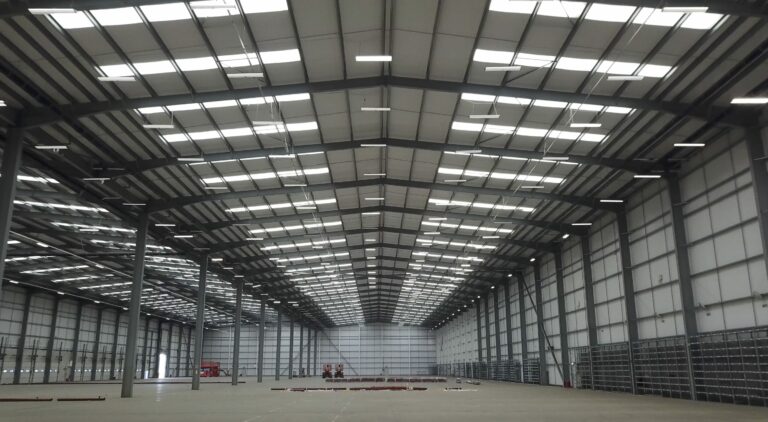
A brownfield site is a preexisting industrial or commercial property with aging infrastructure, unused space, or environmental hurdles, offering both challenges and opportunities for modernisation.
Upgrading a brownfield warehouse means assessing the facility’s condition, addressing any structural or environmental issues, in order to integrate modern automation solutions into the existing layout.
A brownfield project allows a business to implement improvements more quickly, often without causing disruption to the existing workflows.
Development on brownfield projects is typically between 6-12 months, whereas greenfield developments can take between 18-36 months on average.
What is a Greenfield Site?
Greenfield warehouses are developed on a completely blank canvas, which allows for a truly tailored warehouse.
This allows a business to implement the right automation technology from the outset without having to operate within the constraints of a preexisting structure.
On the other hand, greenfield warehouse developments require significantly more capital (at an average of over $100 million per project), take much longer, and often require further significant investments in recruitment and training.
How Does Retrofitting Work?
Retrofitting goes hand-in-hand with a brownfield development and means retrofitting an existing warehouse to support evolving operational requirements. This typically means replacing outdated and often manual processes with automated solutions.
By opting for this kind of fit-out, you can preserve the existing infrastructure and minimise cash flow disruption.
This phased transition ensures your operation can continue during the changeover.
WHAT ARE THE MAIN CHALLENGES OF AUTOMATING BROWNFIELD WAREHOUSES?

At Milestone, we are big advocates for automating brownfield warehouses, as we believe this is where our customers can get the biggest return on their investment.
But retrofitting an existing warehouse does come with its own set of unique complexities that new construction doesn’t face.
By understanding these challenges from the outset, you give your business the best possible chance to plan, minimise disruption, and create a smooth integration and training plan for the new technology:
- Structural Compatibility: All floors, ceilings, and fire protection systems must be modernised to ensure they are safe to use in conjunction with warehouse automation.
- Space Constraints: Legacy layouts may require more tailored system designs or modifications to ensure they can work within the allotted space.
- Integration with Existing Systems: If the automation cannot be integrated with legacy hardware and software, then it may be necessary to completely overhaul these systems.
- Potential Operational Disruption: Although it can be the case that temporary shutdowns are required in certain areas of the system, a strategic and modular approach from the outset means that these can be severely minimised.
- Safety & Compliance: Some older facilities may need work to bring the warehouse back into step with modern safety and legislation.
WHAT ARE THE MAIN ADVANTAGES OF AUTOMATING BROWNFIELD WAREHOUSES?
While building a facility from the ground up may seem appealing, particularly with a shiny new warehouse to show for it at the end of the project, retrofitting an existing warehouse delivers benefits more quickly, with lower upfront costs and decreased operational disruption.
But what are the main benefits of maximising your current infrastructure?
- Cost Efficiency: Retrofitting eliminates the need to acquire land or undergo lengthy planning and construction phases. On average, a greenfield project costs 40–60 % more than a brownfield retrofit.
- Continued Operations: As mentioned, one of the biggest benefits of a brownfield warehouse retrofit is being able to strategically phase each part of the project to minimise disruption.
- Modular Automation: Adaptable, modular systems can be scaled and adjusted to match the needs of the operation. Greenfield tends to focus on fixed, end-to-end systems that are less flexible to changing needs.
- Retain Skilled Workers: Your existing employees can be retrained to use their experience of the warehouse in other, more strategic roles.
WHAT FLOOR REQUIREMENTS ARE NEEDED FOR BROWNFIELD RETROFITS?
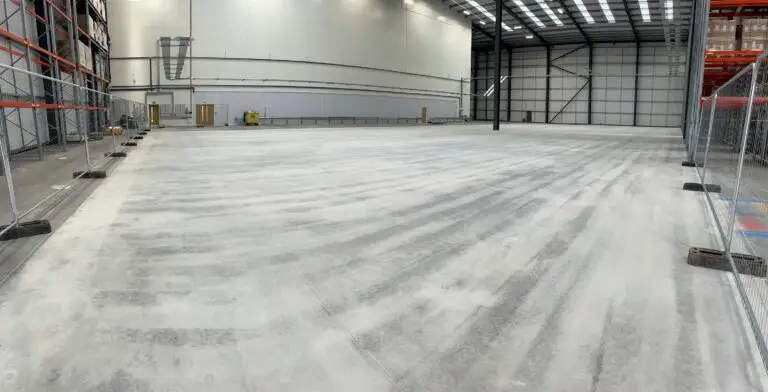
This is a question we’re frequently asked.
Automated retrofits often begin with assessing the condition of the warehouse floors. Precise, flat, and stable floors are a must for many types of warehouse robotics to ensure they can achieve speed and accuracy.
However, this isn’t to say that you need the perfect flooring or a complete replacement from the get-go.
Solutions such as patching, grinding, and overlays are often a faster and cheaper option.
For example, during our project with Clinisupplies, to improve the efficiency of their AGVs across the floor, we undertook a complete survey and grinding programme before proceeding to ensure the floor met the required flatness and tolerance standards.
WHICH AUTOMATION TECHNOLOGIES WORK BEST FOR RETROFITTED WAREHOUSES?
Selecting the right automation for your warehouse is the most important aspect of upgrading your existing warehouse.
Although it may be tempting to adopt the latest and most advanced end-to-end technologies, if they don’t enhance efficiency, reduce manual labour, or optimise storage and retrieval, they aren’t the right choice for you.
Consider these options, which seamlessly fit into an existing warehouse setup and can be scaled up and down when required:
- Automated Storage & Retrieval Systems (ASRS): Ideal for retrofit brownfield warehouses as they maximise storage density, increase picking efficiency, and decrease warehouse footprints by up to 85%.
- Automated Mobile Robots (AMRs) & Automated Guided Vehicles (AGVs): Warehouse robots that navigate through the warehouse independently, without tracks or external guidance. They use sensors, cameras, and safety features to assist with picking.
- Warehouse Management & Control Systems: This software offers a platform to manage and optimise the automated elements of the warehouse.
- Very Narrow Aisle (VNA) Systems: These are ideal in retrofit warehouses as it makes use of vertical space with narrower aisles.
These options are perfect for enhancing operational accuracy, throughput and costs, while giving the opportunity to retain and optimise already existing parts of the system.
BROWNFIELD CASE STUDY: CDW WAREHOUSE AUTOMATION PROJECT
CDW, a leading technology solutions provider, came to us facing high order volumes, limited storage capacity, and processing errors caused by the manual nature of their warehouse.
It quickly became clear that their current warehouse could not accommodate an automation upgrade of the required scale.
We worked with CDW to relocate operations to another pre-existing brownfield site they owned, enabling a smooth transition while allowing their manual operation to continue.
This project perfectly demonstrates how brownfield facilities can deliver significant performance gains without the need for new-build construction.
Highlights included:
- 200-250% throughput increase
- 250% increase in stockholding capacity
- 20% more storage locations
- 16,000 automated tote locations
- 64,000 total stock locations
- ROI achieved within 12 months
You can read the full story of the automation journey we took with CDW across two case studies:
Why do we focus on brownfield automation?
Brownfield isn’t an edge case; it’s the market reality.
Most warehouses in the UK are already operational, and expansion must therefore take place within existing parameters, rather than developing on a completely new piece of land.
In most cases, live operations cannot simply stop for the perfect automation rollout. Layouts evolve, and businesses’ requirements will often need to adapt to market conditions faster than a long-cycle greenfield project can accommodate.
But what does this mean from a practical perspective?
- Live Operations & Minimal Disruption: Phased automation plans agreed at the beginning of the project allow us to continue operations without stopping any one part of the existing flow for extended periods.
- Adaptability: Our modular approach means that we can evolve layouts without costly redesigns.
- Flexibility Over Perfection: Scalable, future-ready systems mean that your operation can flex with market changes.
We work across a range of market sectors and can customise our approach to any scenario, no matter the complexity.
However, we believe brownfield retrofits enable your company to unlock its full potential, increase throughput, and build the operational flexibility and resilience needed for the future, without starting from scratch.
TAKEAWAYS
Upgrading a brownfield warehouse with automation is often a smarter, faster, and more practical choice than starting from scratch.
It lets businesses modernise operations, improve efficiency, and make the most of the space they already have, without the huge cost, delay, or disruption of a new build.
With the right planning and modular systems, brownfield automation can deliver real results while keeping operations running smoothly, giving companies the flexibility they need to adapt to today’s fast-changing market.
If you’d like to find out more about how we can help retrofit your brownfield warehouse, then why not get in touch or book a free thirty-minute discovery call.

By Jared Storey
CEO
Jared is the Founder and CEO of Milestone Projects, a company focused on unlocking the potential of warehouses and supply chains through automation and engineering solutions.
With years of experience in warehouse integration and consultancy, Jared helps businesses harness both established and emerging technologies to drive efficiency and growth. Having worked as both a consultant and integrator, Jared founded Milestone Projects in 2022 to offer a comprehensive approach combining expert advice, hands-on implementation, and ongoing support.