
A Complete Guide to Warehouse Conveyor Systems
Conveyor systems are a crucial component within modern warehouse and industrial operations.
They can be used across a wide range of sectors, such as manufacturing, distribution, food production, e-commerce fulfilment, and much more.
In a nutshell, these systems automate the flow of goods, reduce reliance on manual labour in an increasingly challenging market, and significantly enhance the efficiency of your operation by minimising the risk of human error and maintaining a higher level of safety in the warehouse environment.
As many industries continue to face increasing demands for accuracy, speed, and consumer satisfaction, conveyor systems play a crucial role.
At Milestone Projects, we are automation integrators, which means we have vast experience in installing and managing automated conveyor systems in a range of scenarios.
In this guide, we’ll be explaining what conveyors are, how they work, and what they can do to improve your operations’ efficiency.
WHAT IS A WAREHOUSE CONVEYOR?
At its core, a conveyor is a mechanism designed to move materials or goods from one point to another in an uninterrupted flow.
In automated warehouses, conveyor systems can be seamlessly integrated with AS/RS, robotics, and automated sorting technologies to enhance material handling and optimise storage efficiency.
Whether manually operated or fully automated, conveyor systems can be customised to meet the specific layout and throughput requirements of a facility.
We’ve covered more on the differences between manual and conveyor in the next section
What’s the Difference Between Manual Conveyors vs Automated Conveyor Systems?
Conveyor systems can be either manual or automated. Manual systems rely on some element of human effort (such as pushing carts or carrying goods) while automated systems use motors and controls to move items via belts or rollers.
Manual conveyor systems are often perfect for smaller operations, but are typically slower and more labour-intensive.
Automated systems offer greater speed, efficiency, and flexibility, often integrating functions like sorting, weighing, and packaging, but often may not be the right option for an operation where space is at a premium.
The right choice depends on factors like material type, facility size, workflow complexity, and budget.
Key Benefits of a Conveyor System
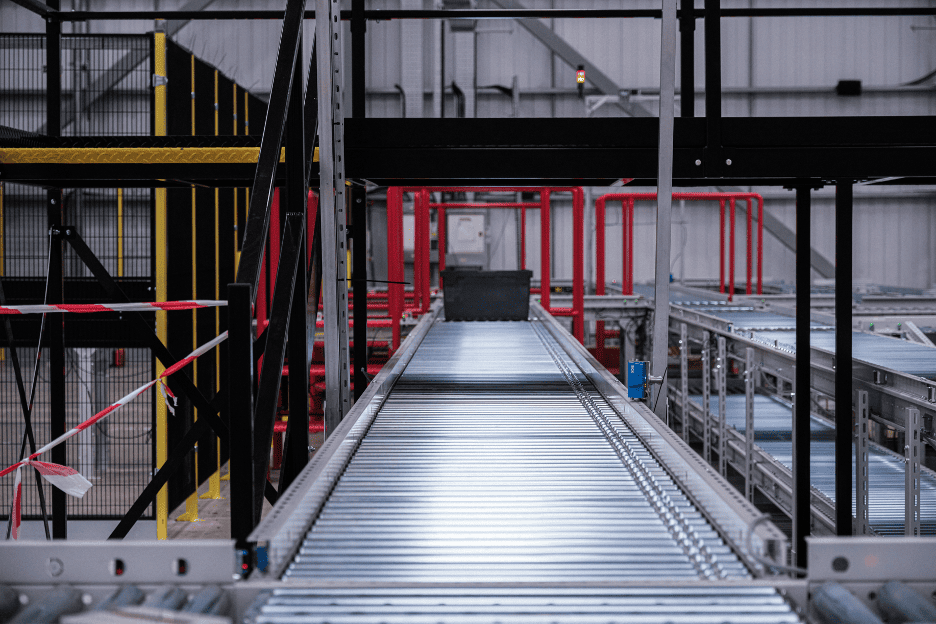
In an economy defined by speed, scale, and digital transformation, manual warehouse operations are at risk of falling behind.
In order to stay competitive, many warehouse operations have already adopted conveyor systems as a key element of their material handling strategy.
Not only are these automated solutions able to deliver speed and accuracy, but the highly modular nature means they can be created to fit a range of bespoke environments.
Some of the standout benefits include:
Accuracy
By allowing humans to take a less hands-on approach to material handling, it means that the risk of error is significantly lowered.
Improved Safety
Manual handling accounts for 17% of all workplace injuries; conveyor systems significantly reduce the need for heavy lifting and manual transportation.
Efficiency
Automation significantly accelerates product movement, reducing bottlenecks and improving your material throughput.
Space Utilisation
According to Savills, the production of warehouses of 1 million sq ft or over has increased by 345% in the past ten years in the UK. Despite this, though, there is increasing concern about the lack of warehouse space available in the coming years.
This means that organisations need to become increasingly savvy when it comes to utilising vertical and horizontal storage.
Conveyors can be designed to make use of these otherwise underutilised areas for increasing storage.
Decreased Cost
Conveyors enable organisations to reallocate labour into more strategic roles, reduce product damage, and minimise downtime – providing a higher ROI. Conveyors don’t just move goods, they streamline operations, support lean practices, and allow employees to focus on higher-value tasks.
Components of a Conveyor
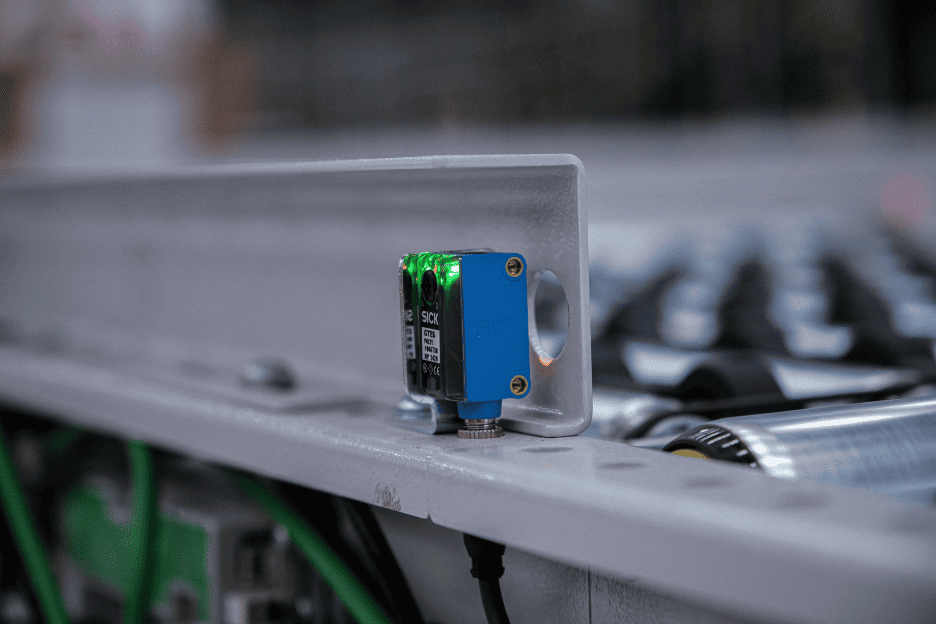
Every conveyor system works by ensuring that every individual component works in harmony:
Belts
Conveyor belts are the most obvious element of the system, along which the materials travel.
These are typically made of:
• Rubber
• PVC
• Fabric composites
The belt loops around pulleys and rollers to move goods from point A to point B. The modular nature of these systems means they can be configured to move lightweight parcels and totes as well as much heavier loads.
The conveyor belt itself can be selected based on the environment, the application, and the kinds of goods being handled; these are typically:
• Flat conveyor belts
• Modular conveyor belts
• Cleated conveyor belts
Rollers & Pulleys
Rollers and pulleys must work simultaneously to guide the movement of the belt or direct items across a roller conveyor.
Rollers can be static, simply allowing product to move along their surface, or powered by an electric motor.
Pulleys, on the other hand, play the role of directing the belt movement and maintaining the tension. Both components need to be perfectly aligned to ensure minimal wear, reduced vibration, and, most importantly, smooth operation.
Anything less than complete alignment can damage the products, potentially create unsafe conditions, and decrease system longevity.
Motors & Drives
Motor and drive units serve as the powerhouse of the conveyor system, delivering the energy to move the belts and rollers. They determine the system speed, direction, and power output.
AC and DC motors are most common, often combined with a variable frequency drive to give greater control over speed.
The drive systems can be centralised or distributed depending on the complexity of the operation.
Bearings & Idlers
Bearings and idlers are responsible for ensuring smooth, low-friction movement within the conveyor systems. Bearings are used to support rotating elements like the rollers and pulleys, giving them the ability to spin freely under load, while mimising thermal buildup and wear.
Idlers are essentially pulleys with no power that help guide and support the belt without influencing the speed. Both elements are used to reduce mechanical wear and absorb the weight of moving items, ensure durability, and effective movement of the conveyor.
Conveyor Sensors
The sensors are the strategic element of the system, and are used to monitor the real-time variables, such as:
• Item presence
• Speed
• Positioning
• Spacing
This is most typically achieved using technologies such as proximity or laser scanning, when the sensor can detect the arrival of products and trigger automated responses, which can stop, reroute, or divert the items to the right place.
When sensors are integrated with a control system, the sensors enable smart features such as automated sorting and safety shutdowns.
Programmable Logic Controllers
Programmable Logic Controllers (PLCs) act as the entire brain of the system, managing how the components interact with each other. The benefit of these controllers allows operators to programme rules for speed, direction, time, and safety protocols.
Control systems are able to coordinate motors, sensors, and actuators in real time to ensure a seamless material flow while adjusting to variations in demand and operational conditions.
Whether you’re managing a basic conveyor or a fully automated distribution centre, PLCs allow for smarter, more strategic decision-making, diagnostics, and integration with wider systems.
Types of Conveyor Systems
As previously touched upon, there are numerous types of conveyor systems, each suited to specific use cases:
Belt Conveyors
Belt conveyors are the most widely used, ideal for transporting a range of products, from small packages to bulkier items.
They’re ideal for movement across uneven surfaces and elevation changes, which is why they’re used so commonly in logistics and food processing operations.
Chain Conveyors
Chain conveyors are designed to move heavy-duty items such as engines, chassis, and other large components.
This is why they’re typically prevalent in automotive operations and heavy manufacturing.
Roller Conveyors
Roller conveyors are perfect for transporting heavier, more rigid loads, such as pallets, totes, and bins.
These can come as a gravity roller conveyor or within a powered roller conveyor system. They offer both flexibility in layout and are typical in warehousing, distribution centres, and assembly lines.
We completed a similar project recently with an AS/RS and over 500m of Milestone conveyor, which you can find out more about here.
Screw Conveyors
Screw conveyors use a rotating helical screw blade to move finer materials, such as powders through a tube. They’re typically found in chemical, food, and wastewater treatment facilities.
Overhead Conveyors
Overhead conveyors suspend items from tracks above, freeing up valuable floor space. They’re commonly used in automotive assembly lines and garment production for transporting parts, components, or finished products through workstations or storage areas.
Among these, belt, roller, and chain conveyors are the most commonly deployed across industries.
Pneumatic Conveyors
Pneumatic conveyors transport fine or dry bulk materials using pressurised air or vacuum systems.
Ideal for applications involving powders or granules (like cement, flour, or plastic pellets), they offer sealed, dust-free operation across complex paths.
Bucket Conveyors
Bucket conveyors move materials vertically by carrying them in attached containers or “buckets.”
Frequently used in agriculture and food production, they efficiently transport bulk materials like grains, sand, or fertiliser to different elevations.
Bespoke Conveyor Systems
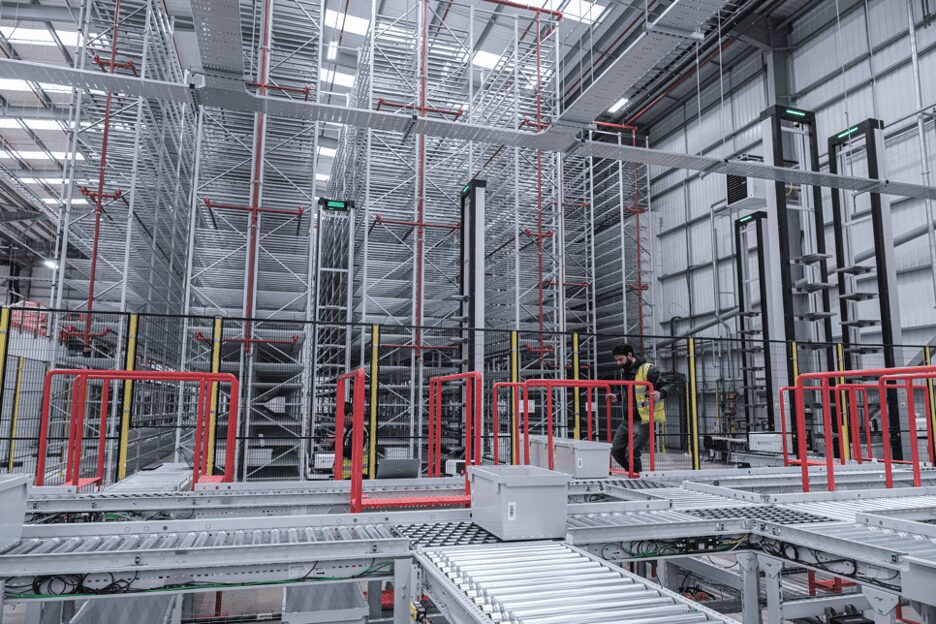
As mentioned, one of the key benefits of conveyor systems is their bespoke nature, which means you can tailor your conveyor systems in a multitude of configurations:
• Dimensions (length, width, height)
• Belt material and speed
• Motor type and power
• Sensor placements and logic
• Load capacity
• Integration with robotics, sorters, AS/RS and pick stations
As part of our Strategy, Fit Out, and Support processes at Milestone Projects, we can work with you to understand how conveyors can impact your operation.
We consider the following elements:
• Operational Goals: What are your throughput targets? Is scalability a factor?
• Layout Constraints: Is the floor space static or subject to change?
• Workforce Integration: Will your employees require training or support?
• Safety Requirements: What safeguards are needed to protect workers?
That being said, we will never recommend any systems in your warehouse that we don’t believe will help you achieve a return on your investment.
Which means there may be some scenarios where conveyor systems may not be the right option:
• In Dynamic Operations: If your warehouse layout changes frequently, fixed conveyor systems may not be the most practical solution, despite their customisability, they’re best suited to stable environments.
• Consider Alternative Technologies: Expanding or modifying conveyors requires planning and downtime. If your warehouse requires high flexibility or frequent reconfiguration, mobile solutions like AGVs (Automated Guided Vehicles) or AMRs (Autonomous Mobile Robots) may be better suited.
• Suited to Predictable Operations: Conveyors are most effective when throughput is predictable and operations are stable. In dynamic or fast-scaling environments, hybrid solutions may offer the best of both worlds.
Conclusion
Conveyor systems are a powerful enabler of warehouse and industrial automation. With a variety of types, components, and customisation options, they can be tailored to support virtually any material handling process.
When implemented strategically, and integrated with expertise, they deliver substantial benefits: speed, accuracy, cost savings, and long-term ROI.
That said, selecting the right system requires careful consideration of operational needs, space, flexibility, and safety.
If you’d like more information on anything we’ve covered in this blog, or you’re interested in hearing about our specialist warehouse automation integration services, why not get in touch with us today to find out more or book a consultation call.

By Jared Storey
CEO
Jared is the Founder and CEO of Milestone Projects, a company focused on unlocking the potential of warehouses and supply chains through automation and engineering solutions.
With years of experience in warehouse integration and consultancy, Jared helps businesses harness both established and emerging technologies to drive efficiency and growth. Having worked as both a consultant and integrator, Jared founded Milestone Projects in 2022 to offer a comprehensive approach combining expert advice, hands-on implementation, and ongoing support.